Begin with a clear family proposition
A family entertainment center needs to explain who it serves and what a visit offers. Different age groups may participate in different activities, while accompanying adults need their own reason to feel comfortable in the venue.
Define the main occasions: casual visits, birthdays, repeat visits or group events. This gives the attraction mix and hospitality offer a purpose and helps establish what the operation must deliver.
Test the location beyond the floor area
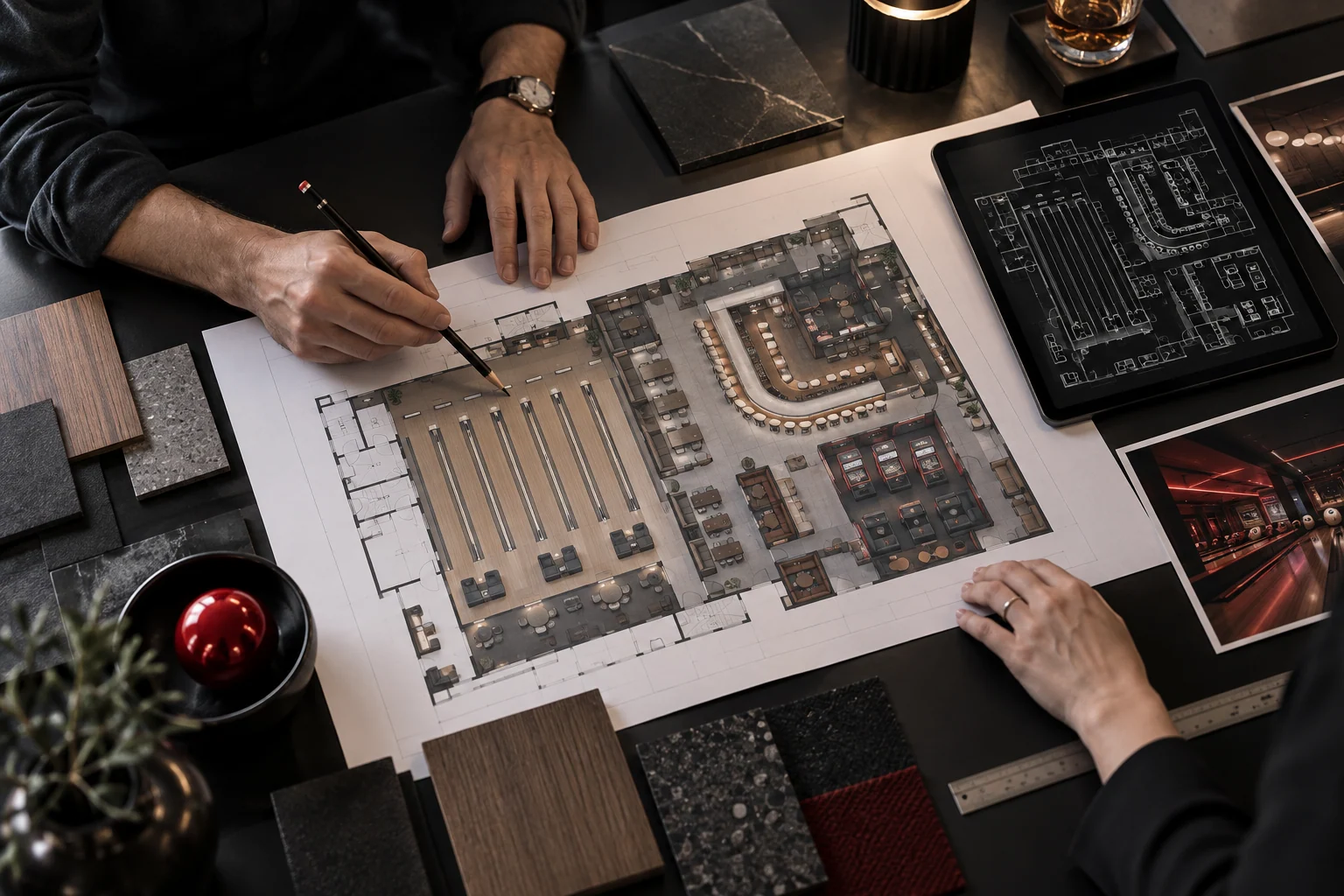
A large space does not automatically make a suitable venue. Access, visibility, layout constraints and the relationship with the surrounding offer need to be understood. The practical requirements of installation and operation should be included in the property discussion.
Identify the design and local approval questions that need appointed specialists. The operational concept and their technical work should inform each other before the project becomes difficult to change.
Connect the commercial assumptions
The project model should distinguish the different sources of revenue and the resources they require. Admissions, sessions, arcade play, packages and F&B may operate under different rules.
Keep demand, pricing and cost assumptions visible. Consider how the venue works at quieter times as well as during busy periods, and avoid presenting one forecast as an inevitable result. A concept is stronger when its uncertainties are understood.
Make group visits operationally realistic
Birthday parties and other groups need more than an appealing list of included activities. They require a sequence, capacity, staff responsibilities and coordination with food service.
Work through a full visit before the opening plan is finalized. Check arrival, registration, waiting, activities, refreshments and departure. Karting and laser tag integration addresses this coordination when specialist session-based attractions are included.
Prepare the team and the connected systems
The team needs clear routines, permissions and guidance for common exceptions. Cashless management, booking and POS should support those routines. Training and testing should include the connections between departments as well as individual equipment.
OBED consulting helps bring these questions into a coherent project brief, with defined next steps from concept through pre-opening and operational review.
What to take into your project
A family entertainment center is an operating business built around a guest experience. Plan both sides before committing to the full equipment mix.
Discuss your investment brief