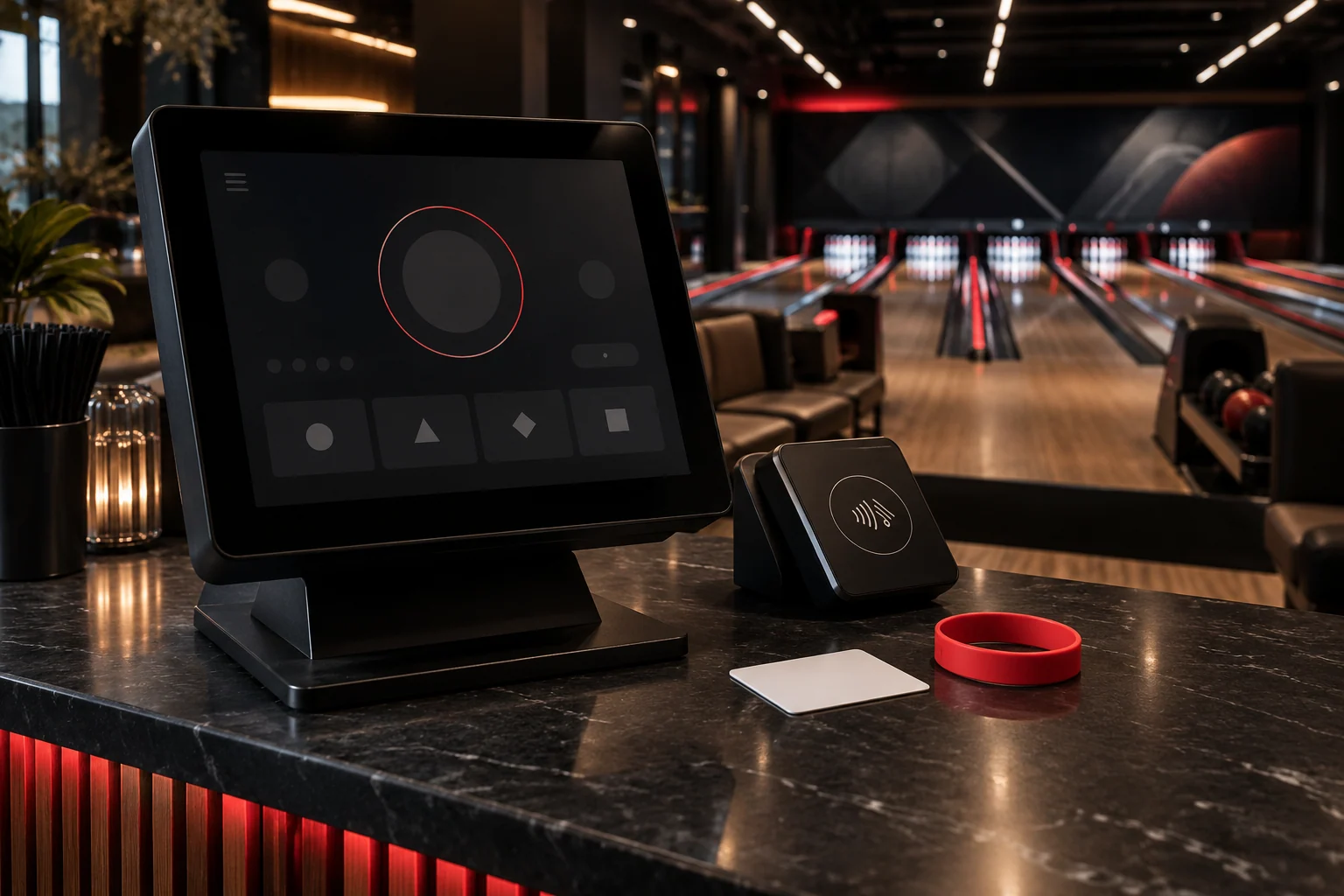
A connected guest journey. Illustrative hardware and interface concept.
Cashless entertainment management connects how guests enter, play, spend and return. OBED helps define the RFID card or wristband experience, the system requirements and the operational rules behind it.
01
Start with a simple guest experience
Define RFID cards and wristbands, account creation, top-up and balance visibility. Guests need clear rules for purchases, use and remaining value; staff need a practical way to help them.
The card or wristband is one part of the experience. The underlying rules must distinguish purchased credit, promotional value, timed access and package entitlements where supported. Guests should understand what they have bought, where it can be used and how to get help without needing a technical explanation.
02
Connect play, entry and rewards
Map arcade payments, attraction access control, ticketing, redemption and prize systems. Confirm what each device supports and how transactions are recorded before selecting the integration scope.
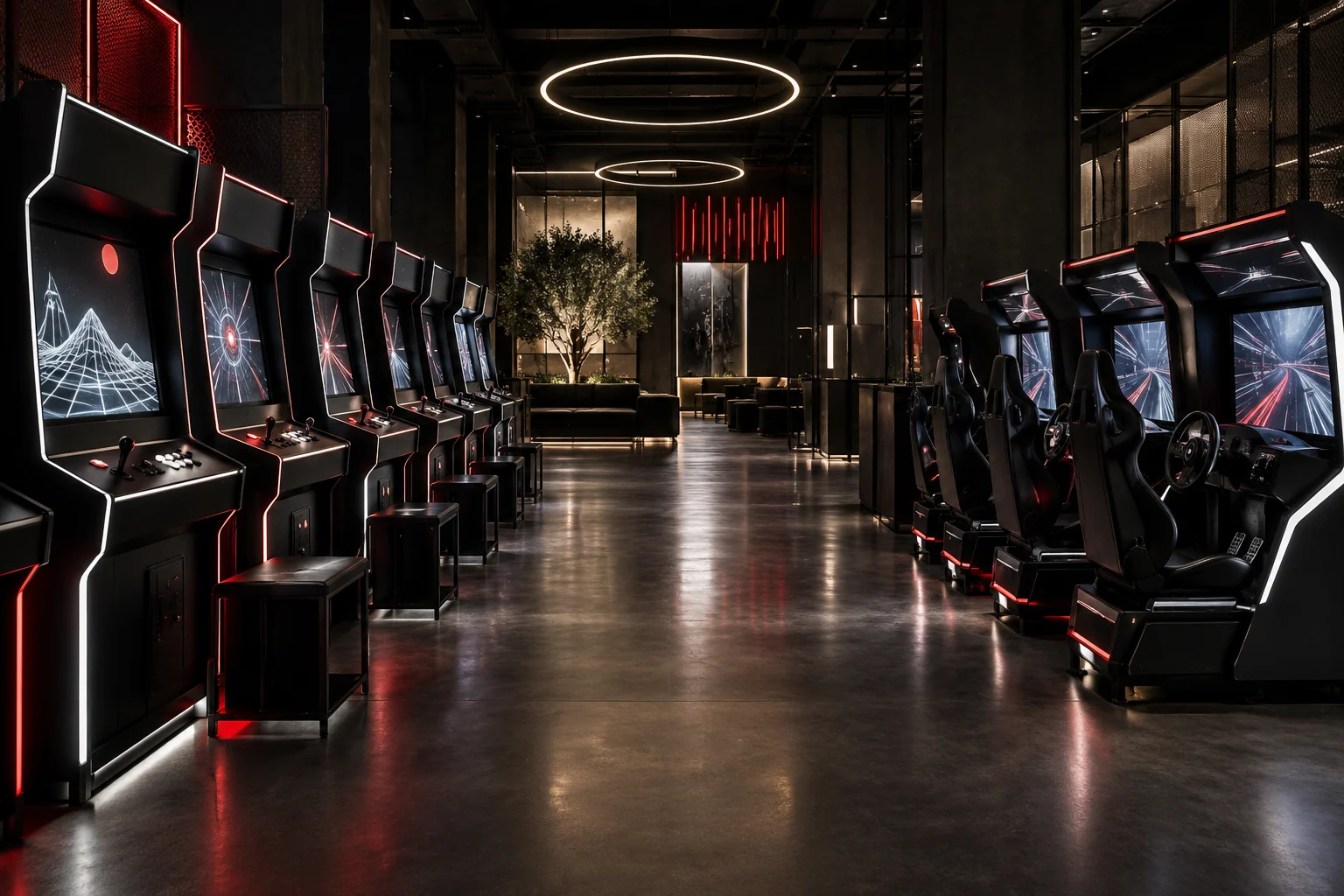
A payment reader, an access device and a game-control system may perform different jobs. We identify those jobs and the information each needs. Our arcade planning and karting and laser tag integration services help connect the requirements across the venue.
Attraction mix, visibility and circulation. Illustrative arcade concept.03
Make packages work across the venue
Birthday packages, events and loyalty programs may combine several attractions with F&B. Plan entitlements, time limits, access rules and redemption conditions so the offer is understandable and manageable.
A family visit and a corporate event may use the same attractions under different commercial rules. We help define who is responsible for each package, which activities it includes and how exceptions are handled. The aim is an offer that is clear at purchase and practical for the team to deliver at every stage.
04
Bring POS and F&B into the same plan
Evaluate POS connections, top-up points, order payments and reconciliation. The cashless balance, payment gateway and fiscal POS each have defined responsibilities; compatibility depends on the chosen providers.
Cashless play does not necessarily mean removing every payment choice at reception. The method used to purchase or top up value is a separate project decision. Payment providers, fiscal requirements and available integrations must be considered for the country and actual POS configuration.
05
See the operation more clearly
Centralized venue management can bring transaction and usage reporting together. We define which views are needed for revenue control, attraction activity and guest behavior, subject to available data and appropriate access controls.
Management should be able to distinguish sales, loaded value, used entitlements and any remaining balances in the way the selected system supports. Those are different operating questions. Reporting definitions and reconciliation should be agreed early so that departments are comparing the same measures.
06
Design the operating rules before rollout
Agree permissions, refunds, balance handling, offline procedures and staff training. Data protection and payment obligations must be checked for the actual setup and market before launch.
OBED works with ArcaMaster as an entertainment technology partner. The specific modules, connected equipment and support responsibilities are selected for your project. A planned rollout should include setup checks, staff scenarios and a clear process for resolving issues after opening.
A whole-venue perspective
Map the ecosystem before choosing the system.
Each connection has a purpose, a supplier and an operational owner. Agree those relationships before implementation.
Conceptual system scope. Connections depend on verified supplier interfaces.
A practical project outcome
What we can develop with you.
The exact deliverables and level of involvement are agreed for your engagement.
A guest journey covering credit, access and entitlements.
A hardware, software and integration requirements map.
Operating rules, reporting definitions and rollout scenarios.
Before we begin
Practical questions. Clear answers.
Can guests use one card or wristband across the venue?+
That is a common project objective. The available experience depends on the selected system, readers, attraction interfaces and POS connections. We define the required journey and verify the components needed to support it.
Is a cashless balance the same as a bank payment?+
No. Purchasing or loading credit and using it in the venue are different steps. The system design must define the roles of the payment provider, POS and guest credit account. The actual configuration is reviewed for the project and market.
Do we have to replace every existing machine?+
Not necessarily. Some equipment may support suitable readers or interfaces. We need the actual device and system details to assess compatibility; the decision is made per component rather than assumed for the whole venue.
What happens if a card is lost or a guest needs a refund?+
These operating rules need to be defined before rollout. Account identification, replacement cards or wristbands, remaining credit and refunds depend on the platform configuration and the venue’s agreed terms. Staff need a clear process for each scenario.