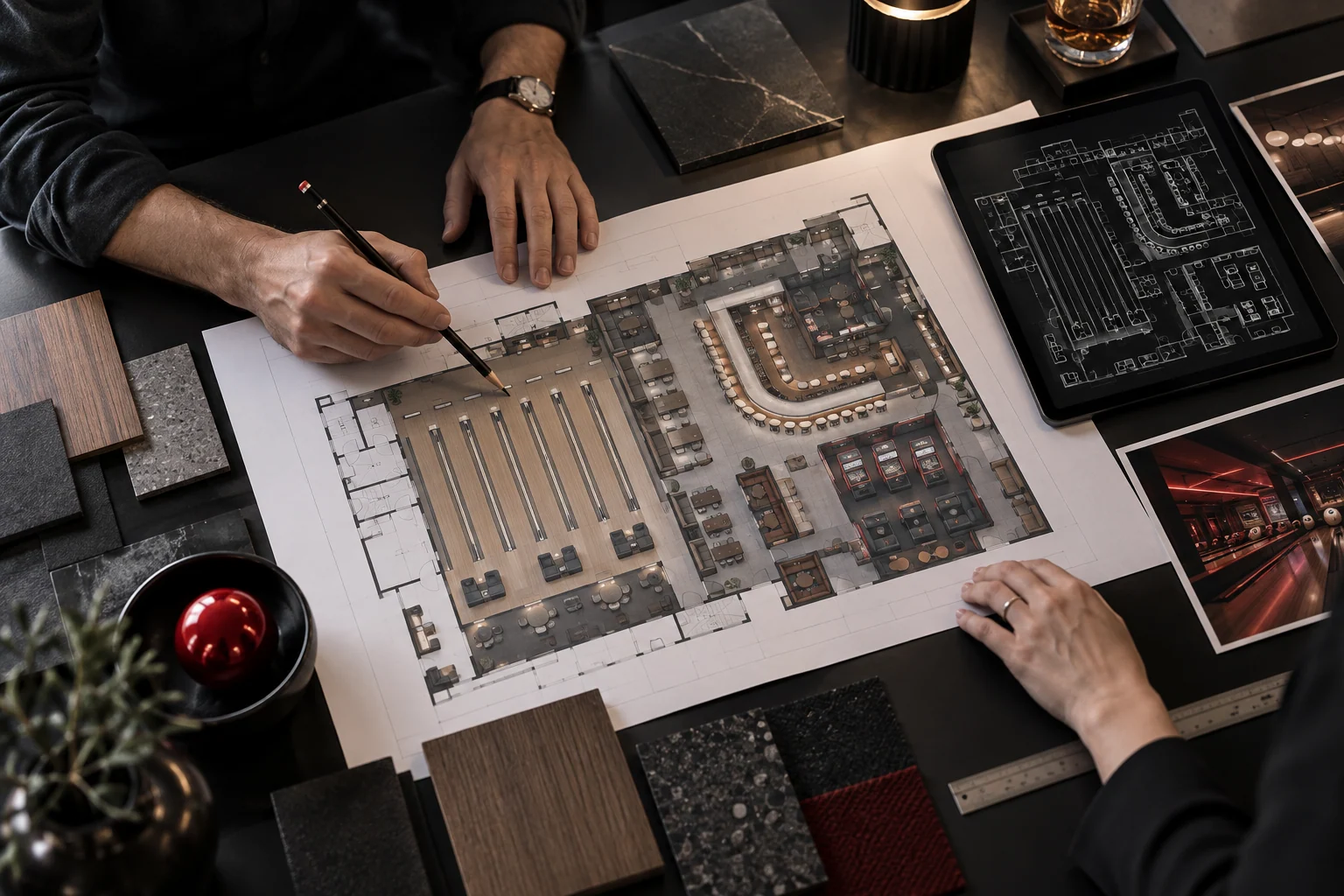
From operating requirements to spatial decisions. Illustrative planning study.
Every serious entertainment project starts with a few connected questions: who will visit, why will they return, how will the venue earn revenue, and what will it take to run it? OBED helps turn those questions into a practical project brief, from idea to operation.
01
Understand the opportunity
Location analysis and market analysis establish the starting point: catchment, access, audience, competition and the role of the venue. Feasibility thinking tests the assumptions behind the project and identifies what needs further evidence.
We separate what is known from what is assumed. A useful starting brief records the location, intended catchment, access, surrounding offer, audience and project constraints. Where evidence is missing, the next task is to obtain it rather than let a confident-looking plan conceal uncertainty.
02
Define the venue and business model
We develop the venue concept, attraction mix and business model together. Monetization strategy considers visit occasions, capacity, pricing logic, repeat visits, F&B and the arcade revenue model.
The attraction mix is tested against the intended visit occasions and revenue model. We consider how different guest groups use the venue, what brings them back and how the offer can be delivered at busy and quieter times. This connects the investment concept with staffing and daily operating requirements.
03
Make the space work
Layout planning connects guest flow, attraction operations, seating, service and back-of-house needs. We produce an operational brief for the design team; statutory design and engineering remain with appointed qualified specialists.
We examine the sequence of arrival, check-in, play, waiting, dining and departure. We also consider the less visible routes used for supplies, maintenance and staff work. The objective is a layout that supports the commercial concept while giving architects and engineers a clear operational brief.
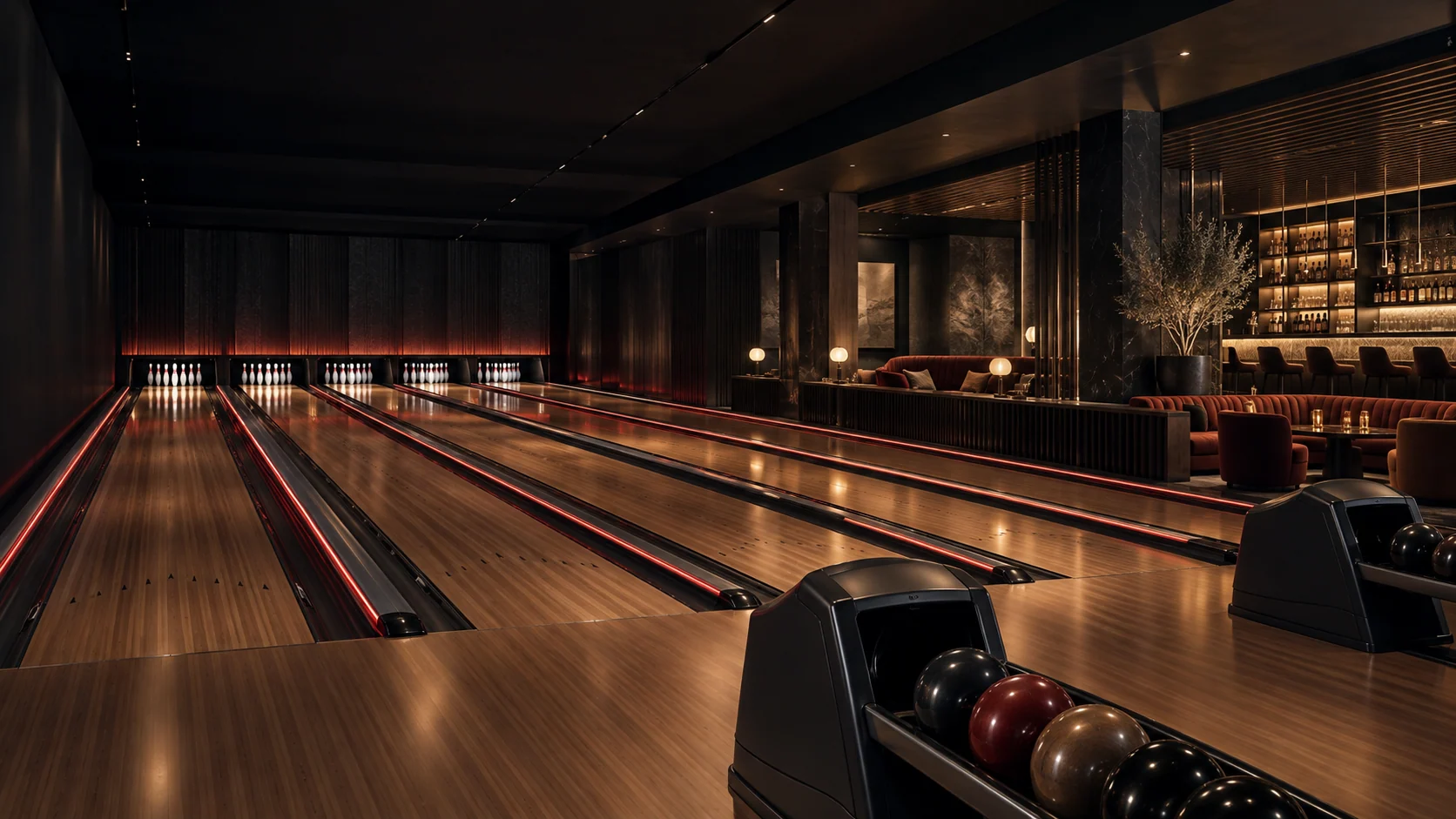
Bowling, hospitality and the guest journey. Illustrative venue concept.
04
Specify the connected solution
Equipment selection follows the concept. The software stack and cashless strategy define how booking, POS, attractions, access, loyalty and reporting should connect. Supplier capabilities are checked against the agreed requirements.
The resulting brief should distinguish essential functions, useful options and decisions that can wait. Professional bowling, arcade and cashless systems are then evaluated against the same operating logic rather than specified as separate purchases.
05
Prepare the team to open
Operational processes, staff training and pre-opening support turn the plan into daily routines. Define responsibilities, rehearse guest journeys and check that packages can be delivered across departments.
Preparation includes the routines between departments, not only instruction on individual equipment. A team should be able to rehearse a normal visit, a busy changeover and an event package. Training, checks and responsibilities are scoped to the actual systems and the engagement agreed with OBED.
06
Learn from real operation
Post-opening support focuses on what the venue is showing you: guest flow, capacity, service friction and commercial performance. We help prioritize improvements using the data and observations available.
An opening is the start of evidence gathering. We help turn observations into a sensible sequence of changes: where people wait, where staff repeat work, which packages create pressure and what the available data says about demand. Improvements are prioritized against effort, cost and operational impact.
A clear scope at every stage
Depending on the engagement, outputs may include an opportunity review, concept brief, attraction and system requirements, operational layout feedback or a pre-opening plan. Deliverables, fees, responsibilities and timing are agreed in writing.
You should know what a stage produces and what decision it supports. An initial review may lead to a more detailed study, supplier specification or implementation plan. The consultation itself is the opportunity to establish which level of work is appropriate; it does not commit you to a full project package.
Bring the project as it stands
You do not need a finished design to start. Share your location, current stage, intended audience and the decisions ahead. We will identify the information needed and propose a suitable next step.
If you are still evaluating locations, say so. If equipment or software has already been selected, share that context. If the venue is already trading, describe the operational issue you want to resolve. We will begin with the actual project, including decisions already made and constraints that need to be respected.
A practical project outcome
What we can develop with you.
The exact deliverables and level of involvement are agreed for your engagement.
An opportunity and concept brief with explicit assumptions.
An attraction, layout and systems brief for the next project stage.
A scoped pre-opening or improvement plan with clear responsibilities.
Before we begin
Practical questions. Clear answers.
At what stage should we contact OBED?+
As soon as you have a location, an idea or a significant operating decision to make. Earlier input can help clarify assumptions before the layout and equipment become expensive to change. Existing venues can start with a specific problem.
What should we prepare for the first conversation?+
Share the country and location, project stage, intended venue type and the main decision ahead. Approximate space, a floor plan and a target opening period are helpful if available. You do not need a completed business plan to begin.
Can we commission consulting before buying equipment?+
Yes. Consulting can be defined as a separate engagement. The deliverables, fees and next decision are agreed in advance. Equipment selection follows the needs of the project rather than being a condition of the first conversation.
Does consulting guarantee commercial success?+
No. It helps clarify decisions, test assumptions and prepare the operation. Results still depend on market demand, investment choices and execution. Any financial model should identify its assumptions and the factors that could change the outcome.