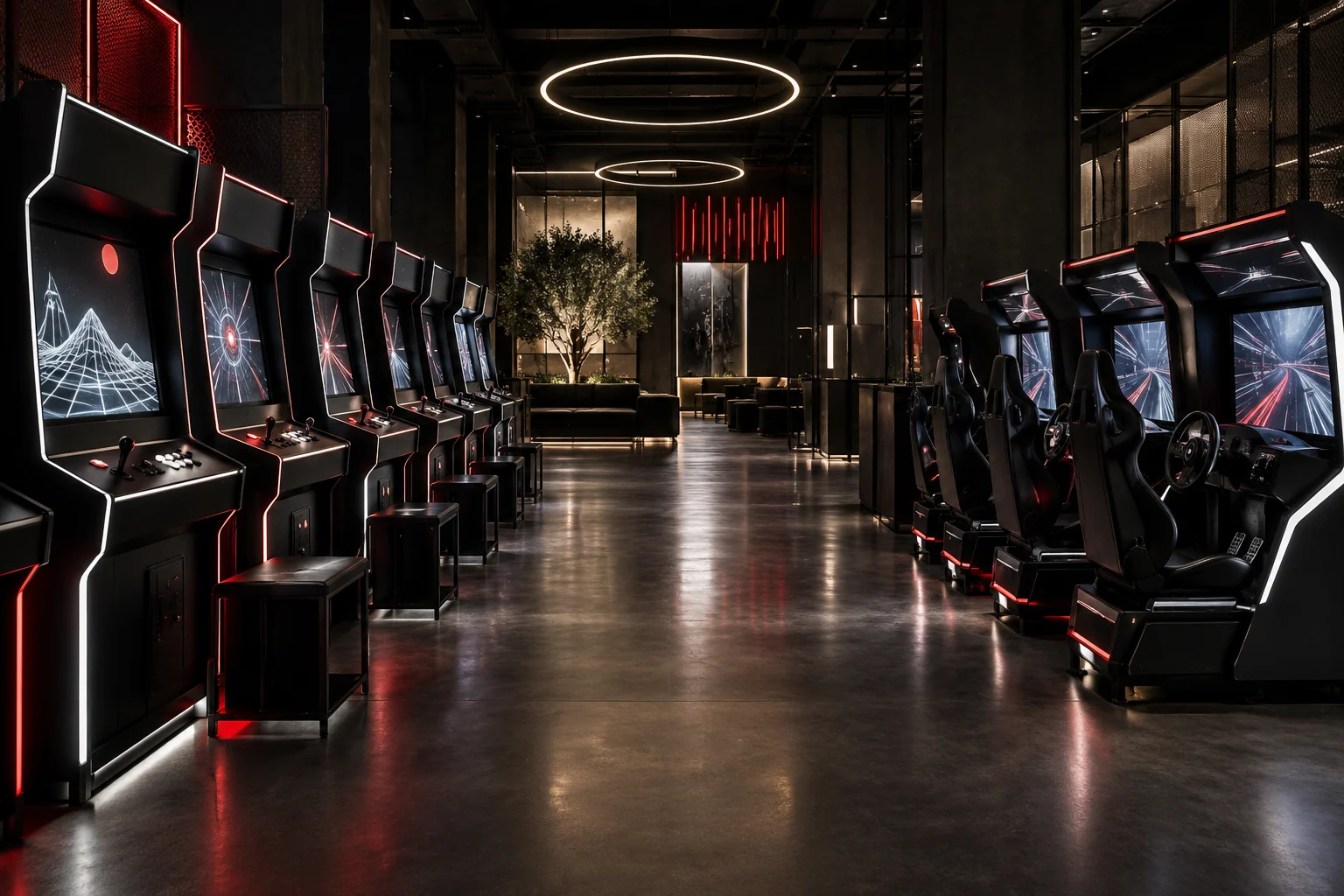
Define who the venue is for
Start with the people and occasions the venue needs to serve. A family afternoon, an evening with friends and a corporate group can place different demands on the same space. Clarify the main audience and the secondary audiences the concept can realistically support.
This is also a question of identity. Guests should be able to understand the offer without navigating a collection of unrelated activities.
Give every attraction a role
An attraction may bring people to the venue, give them a reason to stay, support repeat visits or complement a package. It should have a clear role in the commercial model.
The strongest option is not necessarily the one with the greatest individual visual impact. Consider what it adds to the whole visit and what resources it requires. Arcade planning is a useful example: game selection follows the audience and the role of the zone.
Balance capacity across the visit
Different activities can have different session lengths, participation rules and changeovers. A package that combines them needs a realistic sequence. Waiting, briefing and F&B can become important constraints even when the attraction capacity appears adequate.
Map the visit from arrival to departure and look for points where several groups need the same resource at the same time. This helps the layout and the booking rules support each other.
Include the work around the attraction
Equipment needs more than a place on a plan. It may require staff attention, explanations for guests, maintenance access, supplies and system connections. These needs affect the operating model and the space left for guests.
The same thinking applies to F&B: its role, service routes and group timing should be included while the attraction mix is still being shaped, not fitted around a completed equipment layout.
Leave room to learn
Where the project allows it, distinguish the essential opening concept from options that can be reviewed later. That does not mean leaving the operation unfinished. It means avoiding unnecessary complexity before the demand and operating evidence exist.
OBED consulting helps translate the chosen mix into a coherent brief for layout, equipment and systems. Karting and laser tag integration illustrates the additional coordination needed when several session-based attractions are combined.
What to take into your project
Every attraction should have a reason to be there. The mix works when audience appeal, capacity, F&B and operating resources support the same concept.
Plan your attraction mix